Haunted Dream: A Playful Typography Choice for Joyful Designs
Understanding Haunted Dream’s Unique Appeal
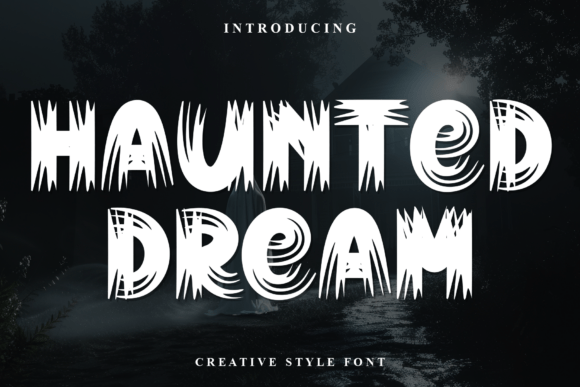
Haunted Dream stands out as a handwritten display font that effortlessly blends charm and character. Unlike many digital fonts that lean toward formality or minimalism, this typeface brings a sense of warmth and personality to any project. Its soft, flowing curves and slightly irregular strokes give it an approachable, human quality—perfect for designs that aim to feel personal and heartfelt.
While the name might suggest something eerie or mysterious, the reality is quite the opposite. Haunted Dream is a sweet and expressive font that evokes a sense of nostalgia and whimsy. It’s ideal for creative professionals who want to add a touch of lightheartedness without sacrificing readability or design integrity.
Key Characteristics and Design Strengths
One of the most notable features of Haunted Dream is its natural, handwritten appearance. Each letter is carefully crafted to mimic the subtle variations of real handwriting, making it feel more authentic than many other script fonts on the market. This attention to detail contributes to its readability and visual appeal, even at smaller sizes.
- Soft curves and gentle angles enhance its friendly tone
- Moderate stroke contrast ensures legibility without overemphasis
- Well-balanced spacing supports clean, cohesive layouts
- Alternate characters and ligatures provide added customization
The font’s versatility lies in its ability to maintain a playful tone while still being suitable for semi-formal applications. Whether used in print or digital media, Haunted Dream holds up well across different formats and resolutions.
Practical Uses and Audience Fit
Designers working on personalized print materials such as wedding invitations, greeting cards, or boutique packaging will find Haunted Dream particularly effective. Its warm, inviting nature makes it a great match for brands or projects that aim to convey sincerity and approachability.
Marketing professionals and small business owners may also benefit from incorporating this font into their branding assets. For instance, a local bakery could use Haunted Dream in social media graphics or product labels to evoke a homemade, artisanal feel.
- Wedding invitations and stationery
- Children’s book illustrations and covers
- Handmade product labels and packaging
- Blog headers and creative website elements
Its legibility and stylistic charm also make it a solid choice for digital content creators who want to stand out without overwhelming their audience with overly ornate typography.
Performance in Real-World Design Scenarios
When evaluating a font’s practical value, it's important to consider how it performs in actual design environments. Haunted Dream holds up well in both print and web applications, especially when used at appropriate sizes. Its character spacing and stroke thickness contribute to good readability, even when used in short paragraphs or captions.
However, due to its decorative nature, it’s best suited for headlines, titles, and short text blocks rather than long-form body copy. Designers should be mindful of this when incorporating the font into multi-page documents or extended website content.
One practical example of Haunted Dream in action is its use in a boutique coffee shop’s promotional material. A seasonal menu or event flyer using this font can feel both charming and professional, striking a balance between casual and curated aesthetics.
Quality, Consistency, and Usability
From a technical standpoint, Haunted Dream is well-constructed. The glyphs are clean and consistent, with minimal distortion across different platforms and applications. Most users report smooth integration with design tools like Adobe Creative Suite, Canva, and Figma.
It also includes a range of ligatures and stylistic alternates, allowing for more nuanced typographic expression. These extras can help avoid repetition in longer text blocks and give the font a more dynamic appearance.
One potential limitation is that while the font has a wide character set, it may not support all extended language characters or special symbols. Designers working on multilingual projects should verify character coverage before committing to use the font.
Who Should Consider Using Haunted Dream?
Professionals who work on emotion-driven design projects will benefit most from Haunted Dream. This includes:
- Graphic designers creating custom illustrations or branding materials
- Marketing teams crafting seasonal campaigns or community-focused content
- Freelancers and bloggers designing visually engaging web assets
- Small business owners developing packaging or local advertising
Educators and content creators working with younger audiences may also find it useful for making educational materials more engaging and visually appealing.
Final Thoughts: Is Haunted Dream Worth Your Time?
For creatives looking to add a touch of warmth and personality to their projects, Haunted Dream is a compelling option. It offers a balance between charm and functionality, making it a reliable choice for a wide range of design applications.
While it may not be the best fit for highly formal or technical contexts, its strengths lie in its ability to connect with audiences on an emotional level. Whether you're designing a heartfelt card, a whimsical logo, or a joyful social media graphic, Haunted Dream can help bring your vision to life with a sense of authenticity and playfulness.