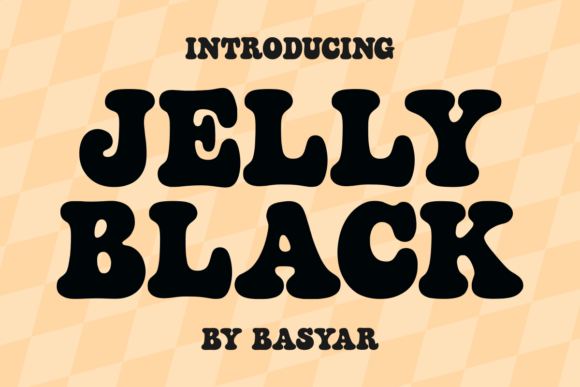
Jelly Black: A Playful Typeface for Bold Design
When you're looking to inject personality and energy into a design project, Jelly Black stands out as a vibrant, expressive choice. This display typeface combines rounded, bubbly edges with a bold, thick structure, giving it a whimsical yet confident presence. Unlike more restrained or minimalist fonts, Jelly Black embraces charm and playfulness, making it ideal for designs that need to feel lively and approachable.
Its visual style feels like a modern twist on retro cartoon lettering, blending nostalgia with contemporary design sensibilities. Whether you're crafting a logo, designing packaging, or putting together a poster, this font brings a sense of fun without sacrificing clarity or impact. It's especially effective when you want to communicate joy, creativity, or youthfulness in your visual message.
Where Jelly Black Shines in Design
Jelly Black excels in applications where visual impact and emotional tone matter most. It’s best suited for headlines, titles, and short bursts of text rather than long-form content. Its bold nature makes it perfect for:
- Brand logos and identity systems that want to feel energetic and memorable
- Children’s book covers, toy packaging, and educational materials
- Event posters, party invitations, and social media graphics
- Apparel tags, boutique packaging, and product branding
- Creative editorial layouts where a modern, expressive tone is key
Designers working in both print and digital formats find Jelly Black especially useful for web headers, digital illustrations, and branding materials that aim to stand out. It works particularly well in lifestyle, fashion, and food niches where a sense of fun or bold personality enhances the visual storytelling.
How Jelly Black Influences Design and Branding
Typography plays a subtle but powerful role in how audiences perceive a brand or message. Jelly Black contributes to this in several ways:
- Readability – Despite its playful appearance, Jelly Black remains legible at a glance, especially in larger sizes. Its clean curves and consistent weight help maintain clarity.
- Visual hierarchy – Its bold structure makes it an ideal choice for primary headlines, naturally drawing the eye before secondary text.
- Brand perception – Brands using Jelly Black often come across as friendly, modern, and creative. It’s a great fit for small businesses and lifestyle brands looking to connect emotionally with their audience.
- Audience engagement – The font’s energetic tone can help make promotional materials and social media posts feel more engaging and approachable.
When used consistently across different touchpoints—like a website, packaging, and printed ads—Jelly Black helps reinforce brand recognition and personality. It’s not just a design choice; it becomes part of a brand’s visual language.
Choosing and Using Jelly Black Effectively
Selecting the right font for a project involves more than just aesthetics. Here are some practical tips to ensure Jelly Black is a good fit:
- Review the font styles included – Many premium fonts come with multiple weights and variations. Jelly Black may include alternate characters or ligatures that add versatility to your design.
- Test readability – Always preview the font in your intended context. While Jelly Black is designed for impact, it may not be suitable for small print or long paragraphs.
- Pair thoughtfully – Use Jelly Black as a headline or accent font paired with a simpler, more neutral typeface like a clean sans serif or serif font. This contrast helps maintain balance and professionalism.
- Check licensing – If you're using Jelly Black for commercial work, ensure you have the appropriate license. Some fonts are free for personal use but require a paid license for business or resale purposes.
For example, a boutique coffee shop might use Jelly Black for its logo and menu headers, paired with a modern sans serif like Montserrat or Open Sans for body text. In this case, the font adds personality without overwhelming the design or making it hard to read.
Real-World Examples and Design Tips
Designers often reach for Jelly Black when working on projects that benefit from a sense of spontaneity or youthful energy. A clothing brand targeting Gen Z might use it in a logo or social media graphics to reflect a bold, expressive identity. A children’s toy company could incorporate it into packaging and promotional materials to create a sense of fun and accessibility.
One practical tip is to use Jelly Black in combination with geometric shapes or soft pastel colors to enhance its playful nature. It also works well with hand-drawn illustrations or clean, modern layouts—showing its flexibility across different design styles.
If you're creating a logo, consider testing Jelly Black in both all caps and sentence case to see which version feels most balanced and legible. Sometimes, all caps can make the font feel too bold or crowded, especially in smaller sizes.
For digital use, always preview how the font renders on screen. Some display fonts can appear slightly pixelated or uneven at smaller sizes or on low-resolution displays. When in doubt, test it across devices to ensure consistency.