Vintage Snowman: A Casual Display Font with Timeless Charm
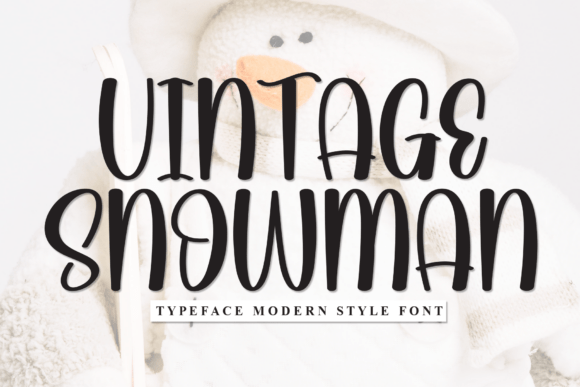
When it comes to typography that strikes a balance between modern minimalism and nostalgic warmth, Vintage Snowman stands out as a compelling option. This casual display font combines clean geometric shapes with softened edges and well-balanced letterforms to deliver a design that feels both contemporary and approachable. Unlike more rigid or formal typefaces, Vintage Snowman embraces a relaxed aesthetic that works well in creative contexts where friendliness and readability are key.
Distinctive Features of Vintage Snowman
At its core, Vintage Snowman is defined by its soft contours and open spacing, which contribute to its legibility even at smaller sizes. The font maintains a consistent rhythm across characters, making it visually harmonious in headlines, logos, and short blocks of text. Its design avoids excessive ornamentation, focusing instead on a clean yet expressive structure that conveys warmth without sacrificing professionalism.
One of the most notable aspects of Vintage Snowman is its ability to evoke a sense of nostalgia without appearing outdated. The rounded edges and gentle curves give it a whimsical quality, reminiscent of mid-century design trends, yet its overall structure remains rooted in modern typographic principles. This makes it a versatile option for designers who want to infuse personality into their work without compromising clarity.
How Vintage Snowman Compares to Similar Fonts
In the category of casual display fonts, several alternatives exist that share some characteristics with Vintage Snowman, though each brings its own distinct flavor. Fonts like Rounded MT Bold or Fredoka One offer similar geometric foundations but often lean more toward a structured or corporate tone. In contrast, Vintage Snowman’s softer curves and more organic feel make it better suited for projects that require a humanized, handcrafted touch.
Compared to script or handwritten fonts, which can sometimes sacrifice readability for style, Vintage Snowman offers a more balanced approach. It retains the charm of informal lettering while avoiding the complexity that can make some handwritten styles difficult to read in certain contexts. This makes it a stronger choice for branding or packaging where legibility matters alongside visual appeal.
Strengths and Use Cases
Vintage Snowman excels in applications where a warm, inviting tone is desired without veering into overly decorative territory. It’s particularly effective in the following scenarios:
- Brand identity: For brands aiming to project a friendly, accessible image, Vintage Snowman can serve as a defining typographic element in logos and marketing materials.
- Packaging design: Its clean yet expressive look works well on product labels, especially in lifestyle, food, or seasonal product categories.
- Social media graphics: The font’s high legibility and cheerful appearance make it ideal for captions and promotional posts on platforms like Instagram and Pinterest.
- Event posters and flyers: Whether for a holiday market or a local workshop, Vintage Snowman adds a touch of personality without overwhelming the message.
Tradeoffs and Limitations
While Vintage Snowman has many strengths, it’s not a one-size-fits-all solution. Because it’s a display font, it’s not recommended for long-form body text or small-size applications where clarity is critical. Its rounded structure, while visually appealing, may not convey the same level of authority or seriousness as more traditional serif or sans-serif fonts in professional or academic settings.
Designers should also consider the overall visual context when using Vintage Snowman. Pairing it with overly complex imagery or busy layouts can diminish its impact. For best results, it works well alongside minimalist or semi-flat design styles where its softness can shine without competing for attention.
When Vintage Snowman Is the Right Choice
Selecting the right font depends heavily on the intended message and audience. Vintage Snowman is particularly well-suited for:
- Projects targeting younger audiences or those seeking a nostalgic aesthetic
- Designs that require a balance between modernity and warmth
- Visual identities that aim for a casual, approachable tone
For example, a local coffee shop looking to refresh its branding might find that Vintage Snowman complements a rustic or vintage-inspired logo better than a sleek, geometric sans-serif. Similarly, a children’s book illustrator could use the font in promotional materials to reflect the playful and imaginative tone of the content.
When to Consider Alternatives
If the design brief calls for a more formal tone, or if the font needs to function well across both print and digital environments at varying sizes, designers may want to explore other options. Some alternatives to consider include:
- Montserrat: A versatile sans-serif with a modern feel that works well in both headings and body text.
- Quicksand: Another rounded font with a clean, contemporary appearance, suitable for a wide range of uses.
- Lobster: A more stylized script font with strong personality, though less readable in extended use.
Each of these fonts has its own unique character and functional strengths. The key is to match the font’s personality and technical capabilities with the project’s visual and communicative goals.
Making an Informed Choice
Ultimately, choosing a font like Vintage Snowman is about aligning typographic style with the emotional and practical needs of the project. Designers should evaluate how well the font supports the brand voice, enhances readability, and integrates with other visual elements. Testing the font in various contexts—such as on mockups, color variations, or different background textures—can help determine its suitability before final implementation.
It’s also helpful to consider how Vintage Snowman performs across platforms. While it renders well on screens and in print, adjustments may be needed depending on the output medium. Kerning, line spacing, and contrast with surrounding elements all play a role in how effectively the font communicates the intended message.
By understanding both the strengths and limitations of Vintage Snowman, designers can make informed decisions that enhance the overall impact of their work without overextending the font’s intended use. Whether used as a primary branding typeface or a supporting element in a broader design system, Vintage Snowman offers a distinctive blend of clarity and charm that continues to resonate with modern audiences.