Flotha: A Playful Display Font for Creative Projects
Understanding Flotha and Its Design Appeal
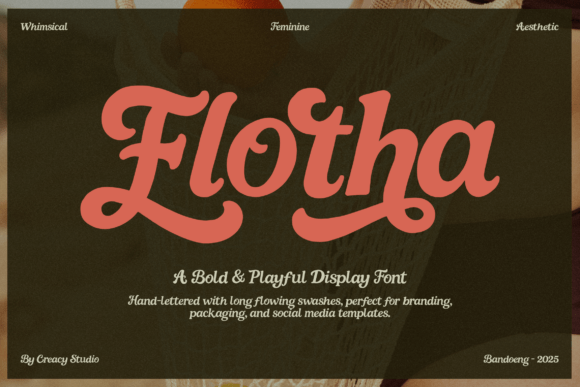
Flotha is a hand-drawn display font that captures attention with its lively curves and expressive character. Designed using a brush pen, each letter flows naturally, giving the typeface a sense of movement and personality. This makes Flotha a strong contender for design projects that require a custom, artisanal feel without the effort of creating lettering from scratch.
Unlike many digital fonts that lean toward uniformity, Flotha embraces subtle imperfections that mimic real brushwork. These characteristics contribute to its charm and make it stand out in visual branding, social media templates, and printed materials where warmth and creativity are essential.
Key Features That Define Flotha
- Handcrafted Brush Style: Each letter is drawn with a brush pen, giving Flotha an organic, expressive look.
- Playful Energy: The font’s bounce and rhythm lend a youthful, dynamic tone to any design.
- High Readability at Larger Sizes: While not ideal for body text, Flotha shines when used for headlines, titles, and short-form content.
- OpenType Features: Includes stylistic alternates and ligatures for added customization and visual interest.
These traits position Flotha as more than just a novelty font. Its design allows for flexibility in creative applications while maintaining a professional finish when used appropriately.
Who Benefits Most from Using Flotha?
Flotha is particularly well-suited for designers and creators working in the following areas:
- Brand identity for lifestyle, wellness, and boutique businesses
- Social media content, especially Instagram stories and templates
- Packaging design for artisanal products, food brands, and handmade goods
- Wedding and event stationery with a modern, hand-lettered aesthetic
- Print-on-demand items like greeting cards, stickers, and apparel
Freelancers and small business owners who need to maintain a consistent visual identity across multiple platforms will appreciate Flotha’s adaptability. Its character makes it especially effective in niches where a personal, approachable tone is key to connecting with audiences.
Real-World Performance and Practical Use
When evaluating Flotha for professional use, it’s important to consider how it performs across different mediums. In digital formats — particularly on mobile screens — the font’s bolder strokes help maintain clarity, even at moderate sizes. For print, the hand-drawn texture adds a tactile quality that complements matte finishes and textured paper stocks.
However, Flotha’s decorative nature means it’s best reserved for short-form content. Using it for long paragraphs or small text can compromise legibility. Designers should also consider pairing it with a clean sans-serif or serif font to create visual balance and hierarchy in layouts.
Usability and Workflow Integration
Flotha is typically delivered in OpenType format, which ensures compatibility with most design software including Adobe Creative Cloud, Figma, and Canva. The inclusion of alternate characters allows for more nuanced design without repeating the same letterforms, which is especially useful for logos and custom quotes.
For users without advanced design tools, some platforms may limit access to certain glyphs. In such cases, the font can still perform well using its standard character set, though some of the stylistic depth may be lost. It’s also important to verify licensing terms before using Flotha in commercial projects, as some font vendors impose usage restrictions.
Quality and Consistency in Execution
The quality of Flotha lies in its thoughtful design. Each letter maintains a consistent baseline and spacing, which helps avoid the disjointed look sometimes found in brush-style fonts. The stroke weight is balanced to ensure that letters remain distinct even when used in close proximity.
That said, because Flotha is a display font, overuse or improper scaling can lead to visual clutter. Designers should test the font in context — whether on a product mockup, social media post, or packaging layout — to ensure it communicates the intended tone without overwhelming the design.
Comparing Flotha to Similar Fonts
In the crowded space of brush script fonts, Flotha holds its own by offering a fresh, energetic look without leaning too heavily into trends. Compared to fonts like Brush Script MT or Quicksand, Flotha provides a more modern and stylized appearance, particularly in digital applications.
It also avoids the overly cursive or ornate tendencies of fonts like Great Vibes, making it more accessible for a broader audience. This balance between style and readability gives Flotha a practical edge in branding and marketing materials where clarity is just as important as visual appeal.
Long-Term Value and Design Sustainability
One of the key considerations when selecting a font for branding is its longevity. Flotha’s playful yet refined aesthetic positions it as a font that can remain relevant across seasons. While it has a contemporary flair, its hand-drawn authenticity helps it avoid the pitfalls of overly trendy design.
Businesses and creatives who invest in Flotha for their visual identity can expect it to remain effective as long as it’s used thoughtfully. Like any design asset, its value is maximized when applied with intention and paired with complementary design elements.
Final Thoughts: Is Flotha Right for Your Project?
Flotha is a versatile and expressive font that brings a sense of warmth and personality to design work. Its handcrafted appeal, combined with solid technical execution, makes it a valuable asset for branding, packaging, and digital content creation. While it may not be suitable for every application, its strengths are clear in contexts that benefit from a human touch and creative energy.
For designers and business owners looking to inject life into their visuals without sacrificing professionalism, Flotha offers a compelling option. As with any design choice, the key is to understand your audience and project needs — and in the right context, Flotha can be the difference between a good design and a memorable one.